
Strength training after 50 is safe for most women, strongly recommended by health guidelines, and effective at any starting point. Two or three 20–30 minute sessions a week — with light dumbbells or just body weight — rebuild muscle, protect bones, and improve energy within weeks. The best day to start is this one.
Let's clear something up before anything else: strength training is not bodybuilding. It's not grunting men dropping barbells. It's not an influencer doing jump squats at 6 a.m.
Strength training is simply asking your muscles to work against resistance — a dumbbell, a band, your own body — so they stay strong enough to carry your life. And after 50, no form of exercise gives a woman more in return.
Why does strength training matter so much after 50?
Three reasons, all backed by decades of research.
Muscle. Adults lose 3–8% of muscle mass per decade after 30, and menopause accelerates the loss. Strength training is the only thing that directly reverses it — we explain the full picture in Muscle Loss After 40.
Bones. After menopause, bone density declines fast. Bones respond to load: when muscles pull on them, they reinforce themselves. Resistance training is one of the best-documented defenses against osteoporosis.
Independence. Grip strength, leg strength, and balance predict how well people live in their 70s and 80s. The strength you build now is the future you're choosing.
What do you need before starting?
- Clearance, if it applies to you. Heart condition, osteoporosis diagnosis, joint replacement, uncontrolled blood pressure, or years of complete inactivity? A quick doctor conversation first. Most physicians will cheer you on.
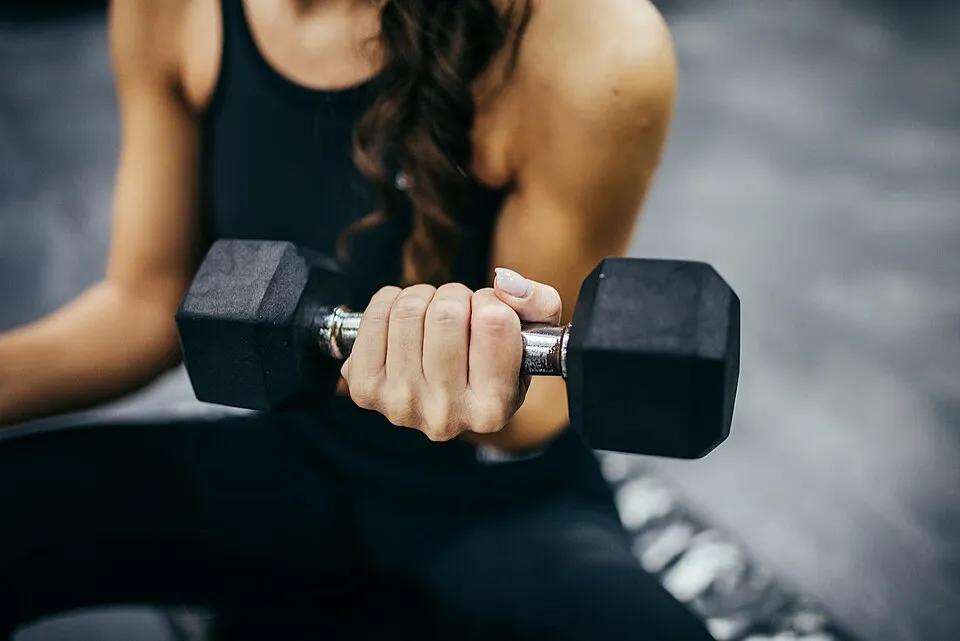
- Equipment: almost nothing. A pair of light dumbbells (3–8 lb), or a resistance band, or just your body weight and a sturdy chair. Total investment: under $30 — or zero.
- Space: the corner of a living room.
- Time: two sessions of 20–30 minutes per week. That's it. Three is great; two is enough to change your trajectory.
The 4-week beginner plan
Do this routine twice a week with at least one rest day between sessions. Move slowly and with control — two seconds up, two seconds down. Breathe out on the effort.
Weeks 1–2: body weight, learning the moves
- Chair squats — sit down and stand up from a chair without hands. 2 sets of 8.
- Wall push-ups — hands on the wall at shoulder height, body in a straight line. 2 sets of 8.
- Step-ups — onto a low, stable step; alternate legs. 2 sets of 6 per side.
- Glute bridge — lying on your back, lift hips, squeeze, lower. 2 sets of 10.
- Farmer's carry — walk 30 seconds holding something moderately heavy in each hand. 2 rounds.
Weeks 3–4: add light resistance
- Hold dumbbells during chair squats.
- Swap wall push-ups for counter push-ups (hands on a kitchen counter — a steeper angle).
- Add bent-over rows: hinge forward, pull dumbbells toward your ribs. 2 sets of 10.
- Add overhead press: press light dumbbells from shoulders to overhead. 2 sets of 8.
- Move everything to 3 sets when 2 feel comfortable.
After week 4: keep the same skeleton and apply the golden rule — when 12 repetitions feel easy, make it slightly harder (heavier dumbbell, deeper squat, slower tempo). That gradual increase, called progressive overload, is the entire secret. Everything else is detail.
What mistakes should you avoid?
- Starting too heavy. Sore for five days isn't dedication; it's a setback. Light and consistent beats heavy and abandoned.
- Skipping rest days. Muscle is built during recovery, not during the workout.
- Only training what's easy. Legs and back matter more than arms — they carry your life.
- Ignoring food. Muscles need protein to rebuild. Most women over 50 eat too little of it.
- Quitting at week 3. That's exactly when your nervous system finishes the "learning phase" and real changes begin.
What can you expect, week by week?
Weeks 1–2: some soreness, then a surprising discovery — daily movements feel a little easier.
Weeks 3–6: noticeably stronger in every exercise. Better sleep. Steadier energy — if fatigue is your battle, see our guide on midlife tiredness.
Months 2–3: visible tone, clothes fitting differently, and a metabolism working with you — the connection we map in Weight Gain After 40.
Month 6+: measurable strength gains, protected bones, and something harder to measure: the quiet confidence of a body you trust again.
Frequently asked questions
Is it safe to start lifting weights at 50 or 60?
For most women, yes — and health authorities actively recommend it. Start light, learn the form, progress slowly. With heart disease, osteoporosis, or joint replacements, have a quick doctor conversation first to tailor the plan.
How heavy should my first dumbbells be?
Light enough for 10–12 clean repetitions, heavy enough that the last two feel challenging — usually 3–8 pounds for beginners. When 12 reps get easy, go up. Progression beats the starting number.
How long before I see results?
Strength: 2–4 weeks. Visible tone: 8–12 weeks with consistency and protein. Bone benefits: months to years. The clock starts the day you do.
Does strength training help prevent osteoporosis?
Yes — it's one of the best-documented defenses, because bones reinforce themselves under load. With an existing osteoporosis diagnosis, involve your doctor or a physical therapist in exercise selection.
Sources
- Physical Activity Guidelines for Americans, U.S. Department of Health and Human Services. health.gov
- National Institute on Aging — exercise and physical activity for older adults. nia.nih.gov
- Volpi E, et al. Muscle tissue changes with aging. PubMed
- The Menopause Society — bone health after menopause. menopause.org
Chris S. — Founder & Writer
Chris is 46 and living the same chapter she writes about. She started The Well Chapter to turn solid sources into calm, practical guidance for women navigating the changes that come after 40 — without hype, fear, or miracle promises.