
New or worsening anxiety during perimenopause is real and common, even in women who've never dealt with it before — fluctuating estrogen affects the same brain chemistry involved in anxiety regulation. It can show up as constant low-grade worry, a racing heart, or something closer to panic. It's genuinely treatable: sleep, exercise, stress management, therapy, and sometimes medication or hormone therapy all have real evidence behind them.
It can arrive as a surprise: a persistent hum of worry that wasn't there before, a heart that races over nothing in particular, a 3 a.m. spiral about something that felt manageable in daylight.
If anxiety is new to you, or worse than you remember it, this isn't a personal failing or a sign you're "not handling things well." There's real physiology behind it.
Why does anxiety increase during perimenopause?
Estrogen interacts directly with serotonin and GABA, two brain chemical systems central to mood and anxiety regulation. As estrogen fluctuates — often more erratically during perimenopause than during the eventual decline to menopause — that regulation becomes less stable, which can produce or intensify anxiety even in women with no previous history of it.
This compounds with the broader hormonal picture: elevated cortisol (see our cortisol guide) and disrupted sleep (see why you wake up at 3 a.m.) both independently worsen anxiety, and both are also more common during this same transition.
Is this different from the mood swings we've already covered?
Related, but distinct. The irritability and mood swings covered in our mood swings guide tend to be reactive — a shorter fuse, triggered by something specific. Anxiety is often more free-floating: a background hum of worry or dread that isn't necessarily tied to any one trigger, along with physical symptoms like a racing heart or tight chest. Many women experience both, but they're worth understanding separately since they can call for somewhat different approaches.
What does perimenopausal anxiety actually feel like?
It varies, but common patterns include a persistent sense of unease or dread without an obvious cause, difficulty settling your mind especially at night, physical symptoms like a racing heart, tight chest, or shakiness, and a lower threshold for feeling overwhelmed by things that used to feel manageable. Some women describe it as feeling "wired" even when exhausted — related to, but distinct from, the fatigue covered in our midlife fatigue guide.
Could this be a panic attack? What's happening physically?
Some women experience their first panic attack during perimenopause — a sudden, intense wave of fear with physical symptoms like a pounding heart, shortness of breath, dizziness, or a sense of impending doom, usually peaking within minutes. It's frightening, but understanding what's happening physiologically (a surge of stress hormones triggering your body's alarm response) can make it feel less like something is medically wrong in the moment, even though it still deserves attention if it's happening regularly.
What actually helps — evidence-based approaches?
Regular exercise has real, substantial evidence behind it for anxiety. Even moderate daily movement measurably reduces anxiety symptoms for many people — our walking plan is a low-barrier starting point.
Prioritize sleep as a real intervention, not an afterthought. Poor sleep and anxiety feed each other directly in both directions.
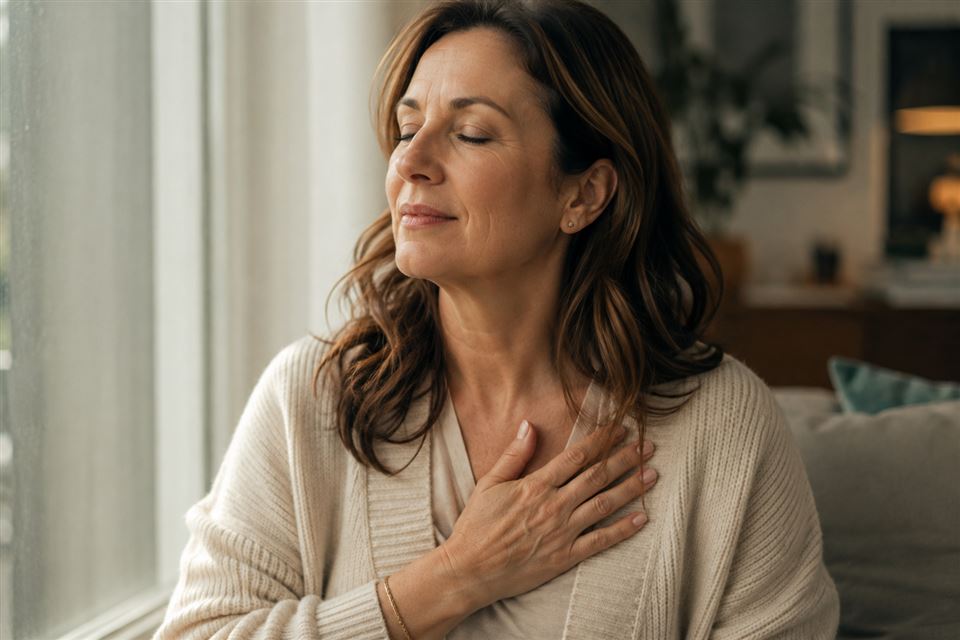
Practice paced breathing or other nervous-system-calming techniques. Slow, deliberate breathing has measurable effects on the physical symptoms of anxiety by directly engaging your parasympathetic nervous system.
Reduce caffeine if you're sensitive to it. Caffeine can worsen anxiety symptoms in some people, particularly the physical ones like a racing heart.
Consider therapy, especially CBT. Cognitive behavioral therapy has strong evidence for anxiety specifically, and many therapists now specialize in the menopause transition.
Does hormone therapy help with anxiety?
For some women, yes — by stabilizing the estrogen fluctuations that contribute to anxiety in the first place. For others, especially those whose anxiety is more independent of the hormonal transition, therapy and/or anti-anxiety medication may be more directly effective. This is a genuinely individual decision worth discussing with your doctor, ideally one familiar with both menopause and mental health.
When should you see a doctor about anxiety?
Bring it up if anxiety is significantly affecting your daily life, work, or relationships, if you're having panic attacks regularly, if you notice new heart palpitations or chest symptoms (worth ruling out a cardiac cause first, especially given rising heart disease risk after 40), or if you're having any thoughts of self-harm, which always warrants immediate support.
Frequently asked questions
Can perimenopause really cause anxiety if I've never had it before?
Yes — research confirms perimenopause is a genuine window of elevated risk for new-onset anxiety, even without prior history. Fluctuating estrogen affects the same brain chemistry involved in anxiety regulation.
What's the difference between perimenopausal anxiety and generalized anxiety disorder?
Perimenopausal anxiety often has a newer onset tied to the hormonal transition and may fluctuate with other symptoms. Generalized anxiety disorder is more persistent and chronic. A doctor can help sort out which pattern fits.
Are heart palpitations from anxiety dangerous?
Usually not on their own, but new palpitations should be evaluated to rule out a cardiac cause first. Once that's ruled out, anxiety-related palpitations aren't typically harmful.
Do natural remedies like magnesium or ashwagandha actually help?
Some evidence suggests modest benefit, though it's limited compared to established treatments. Reasonable to discuss with your doctor, but shouldn't replace therapy or medication for significant anxiety.
Sources
- National Institute of Mental Health — anxiety disorders; women's mental health. nimh.nih.gov
- The Menopause Society — anxiety and mood during the menopause transition. menopause.org
- Anxiety and Depression Association of America (ADAA) — women and anxiety. adaa.org
- 988 Suicide & Crisis Lifeline (U.S.). 988lifeline.org

Chris S. — Founder & Writer
Chris is 46 and living the same chapter she writes about. She started The Well Chapter to turn solid sources into calm, practical guidance for women navigating the changes that come after 40 — without hype, fear, or miracle promises.