
Calisthenics — training with your own body weight instead of equipment — is a genuinely effective, joint-friendly way to build real strength after 40. Modified push-ups, squats, planks, and glute bridges give beginners plenty of resistance to work with, and every movement can be adjusted to match your current fitness level. No gym membership or equipment required, and it pairs naturally with everything covered in our strength and bone density guides.
Bodyweight training has a branding problem: it sounds either too basic to matter or too advanced for beginners, depending on which corner of fitness content you've encountered. Neither is quite right.
Done well, calisthenics is one of the most accessible, adaptable ways to build real strength — and it meets you exactly where you are.
What is calisthenics, and why does it work well after 40?
Calisthenics uses your own body weight as resistance, through movements like push-ups, squats, lunges, and planks, rather than external weights or machines. It works well specifically after 40 because movements are naturally scalable — you adjust leverage, range of motion, and tempo to make an exercise easier or harder, which makes it simple to start at your actual current level rather than a generic prescribed weight.
What's realistic to expect as a true beginner?
Real strength gains, genuinely — muscle responds to being challenged consistently, and bodyweight resistance is entirely sufficient for that in the beginning stages. Don't expect to do a full "textbook" push-up on day one if it's been years since regular exercise; modified versions build the same muscles and are just as legitimate a starting point.
A beginner-friendly bodyweight routine (4 weeks)
Weeks 1–2: learn the movements
- Wall or countertop push-ups: 2 sets of 8–10
- Chair-assisted squats: 2 sets of 10
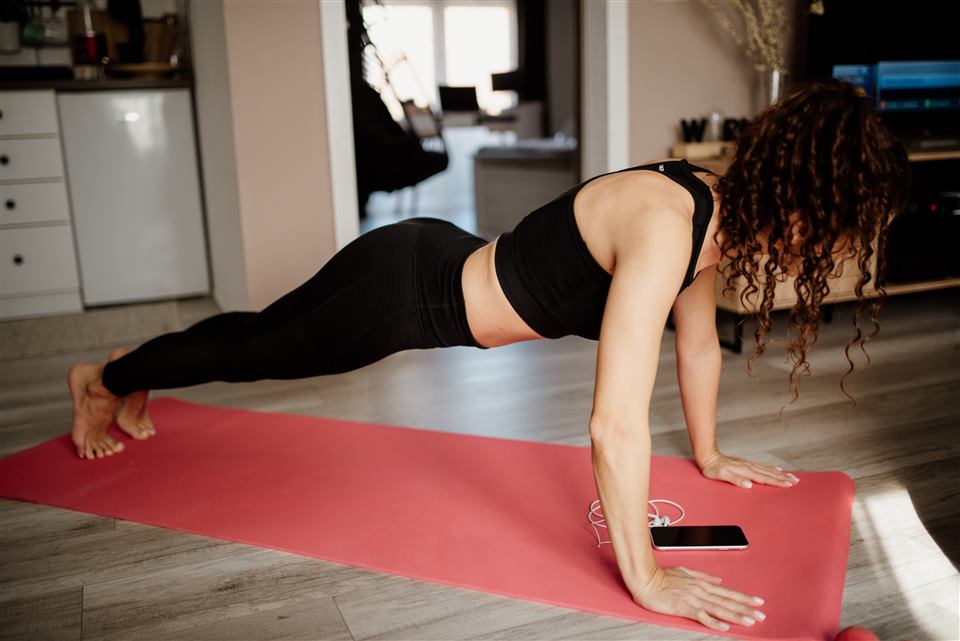
- Knee planks: 2 sets, hold 15–20 seconds
- Glute bridges: 2 sets of 12
- 2–3 sessions this week, with a rest day between
Weeks 3–4: build capacity
- Incline push-ups (hands on a sturdy table or bench): 3 sets of 8–10
- Bodyweight squats (no chair): 3 sets of 12
- Full planks: 3 sets, hold 20–30 seconds
- Single-leg glute bridges: 2 sets of 8 per side
- Add a third weekly session if recovering well
How do you modify moves if you have joint pain?
Push-ups can move to a wall or counter to reduce wrist and shoulder load; squats can use a chair for support and a shorter range of motion. Slow, controlled reps are generally kinder to joints than fast or bouncing ones — see our joint pain guide for the fuller picture on what helps and what to watch for.
Do you eventually need weights too?
Not necessarily, though many women eventually add them for continued progress once bodyweight alone stops feeling challenging. Progressive resistance — whatever form it takes — is what matters most for the bone density benefits covered in our bone density guide, and calisthenics can be progressed for a long time through harder variations before external weight becomes necessary.
Safety: what to watch for
Stop and modify further if you feel sharp pain (different from normal muscle fatigue), and don't sacrifice form for reps — a smaller range of motion done correctly beats a full range done poorly. If you're new to exercise entirely or have an existing health condition, a quick check-in with your doctor before starting is a reasonable precaution.
Frequently asked questions
Is calisthenics enough, or do you need weights too?
Bodyweight training alone provides plenty of resistance for beginners to build real strength for months. Weights become useful later for continued progress, but aren't necessary to start.
Can you build real muscle with just bodyweight exercises?
Yes — muscle responds to being challenged, not specifically to external weight. Adjusting leverage, tempo, and range of motion increases difficulty as you progress.
How do you modify push-ups and squats for joint pain?
Push-ups against a wall or counter reduce wrist and shoulder load; squats with a chair for support reduce knee strain. Slow, controlled movement is generally more joint-friendly.
How often should you do calisthenics as a beginner?
Two to three sessions a week with rest days between, allowing muscles time to recover and adapt — which is when strength actually builds.
Sources
- Physical Activity Guidelines for Americans — strength training recommendations. health.gov
- American College of Sports Medicine (ACSM) — resistance training guidelines. acsm.org

Chris S. — Founder & Writer
Chris is 46 and living the same chapter she writes about. She started The Well Chapter to turn solid sources into calm, practical guidance for women navigating the changes that come after 40 — without hype, fear, or miracle promises.